
Future Cities episode 29: Trees to help our cities breathe
We all know that trees provide all sorts of benefits to people, right? But different trees provide different benefits and trees will only provide those benefits if we can make
Meet Executive Master of Sustainable Leadership alumnus Dan Colton
Although he had been taught to live sustainably before he even knew the meaning of the word, Dan Colton’s interest in sustainability wasn’t sparked until he got to — of
Deadline Extended: New GFL Research Accelerator
A few spots still available. Apply to participate in this Global Futures program designed for early to mid-career faculty and research professors. You'll learn adaptive, nimble and impactful solutions to improve your research strategy, innovation and competitiveness.
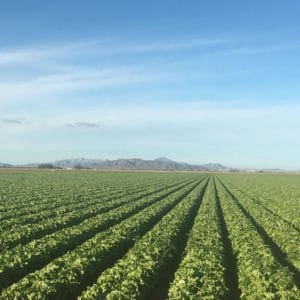
Think you know lettuce, think again: Revelations from a visit to the winter salad bowl
Back in early December I was lucky enough to escape the chilly Northeast to travel to the place that boasts the Guinness World Record for t
A reflection of my time at CGEST and CBO
Written by Nosizo Lukhele As an undergraduate student at Bennington College, which highly cultivates students to be multifaceted, I cannot imagine a better way to have spent the six weeks
Wrigley Lecture rebroadcast: CanopyMeg Lowman
Lowman is a pioneer in treetop science. She gives a fascinating presentation on canopy exploration, inclusivity in science, and how her work can create sustainable practices on local and global scales.
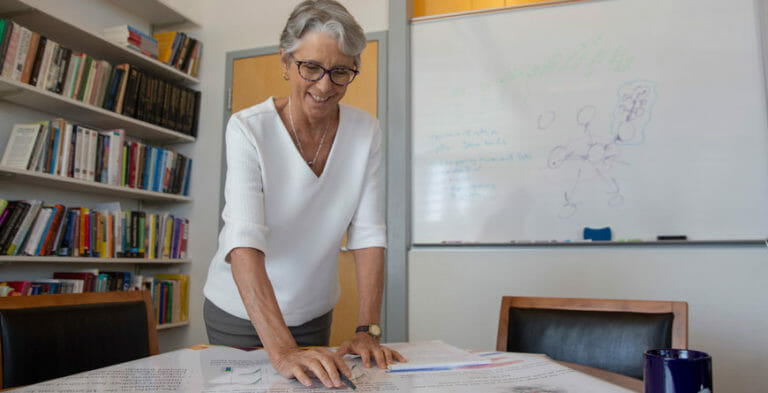
Privacy and the pandemic: We can protect public health without sacrificing individual privacy
Many countries are turning to cell phones and other personal data for tracking social contacts and locations during the pandemic. These efforts potentially pose a threat to digital privacy and anonymity of individual citizens and can easily be used for other purposes than protecting public health. In a recent article, computer scientist Stephanie Forrest argues that relevant public health data can be collected in privacy-preserving ways, both by using immunology-inspired algorithms and
ASU leads in RAPID awards for COVID-19 response
In response to its Dear Colleague letter, the National Science Foundation has awarded 202 RAPID awards totaling almost $32 million dollars. Arizona State University has received 6 awards, the top single university to receive an award.
Flattening the curve in rural Navajo and Hopi communities
Two initiatives, shared by GIOS receptionist Shaundiin Yazzie and led by her sisters, offer opportunities to get involved, donate time or resources to support the COVID-19 response.

One of Microsoft’s 100 most innovative schools globally
Zoya Lytvyn, one of the 2019 WE Empower Awardees, is the founder of Novopecherska, a K-12 school that brings quality education to Ukraine’s children. Lytvyn’s mission is to create future

ASU faculty and staff work to increase Latino representation
Alycia de Mesa is elated. An instructor in the School of Sustainability at Arizona State University, she and her colleague Maria Coca Ascencio, a graduate of the Executive Master of

Meet sustainability alumna Taylor Reimann
Inspired by her love for nature but dismayed by its degradation, Taylor Reimann was determined to pursue sustainability from an early age. “Growing up, my family continued to frequent our