About the Global Drylands Center and our current activities:

Terrain Slope drives Inter-Seasonal Redistribution of Soil Water
Drylands often exhibit seasonal water availability, and determining how plants mediate water redistribution is key in understanding ecosystem productivity. In this project, we are investigating how terrain complexity influences the seasonal redistribution of plant-available water and the resulting influence on woody plant encroachment.

Our efforts to advance dryland sustainability impact the following:
40 % of the global terrestrial area
50% of our world's livestock
30% of our world's human population
35% of all terrestrial carbon fixation

Harnessing Vast Solar Infrastructure to Power Ecological Restoration through Crustivoltaics
Photovoltaic infrastructure can serve as microbial nurseries to grow biocrust to be used as inoculum for arid soil restoration. This approach, which we call "crustivoltaics", takes advantage of the favorable microclimate provided by the solar panels to cultivate a continuous supply of biocrust inoculum with high yields and minimal efforts.
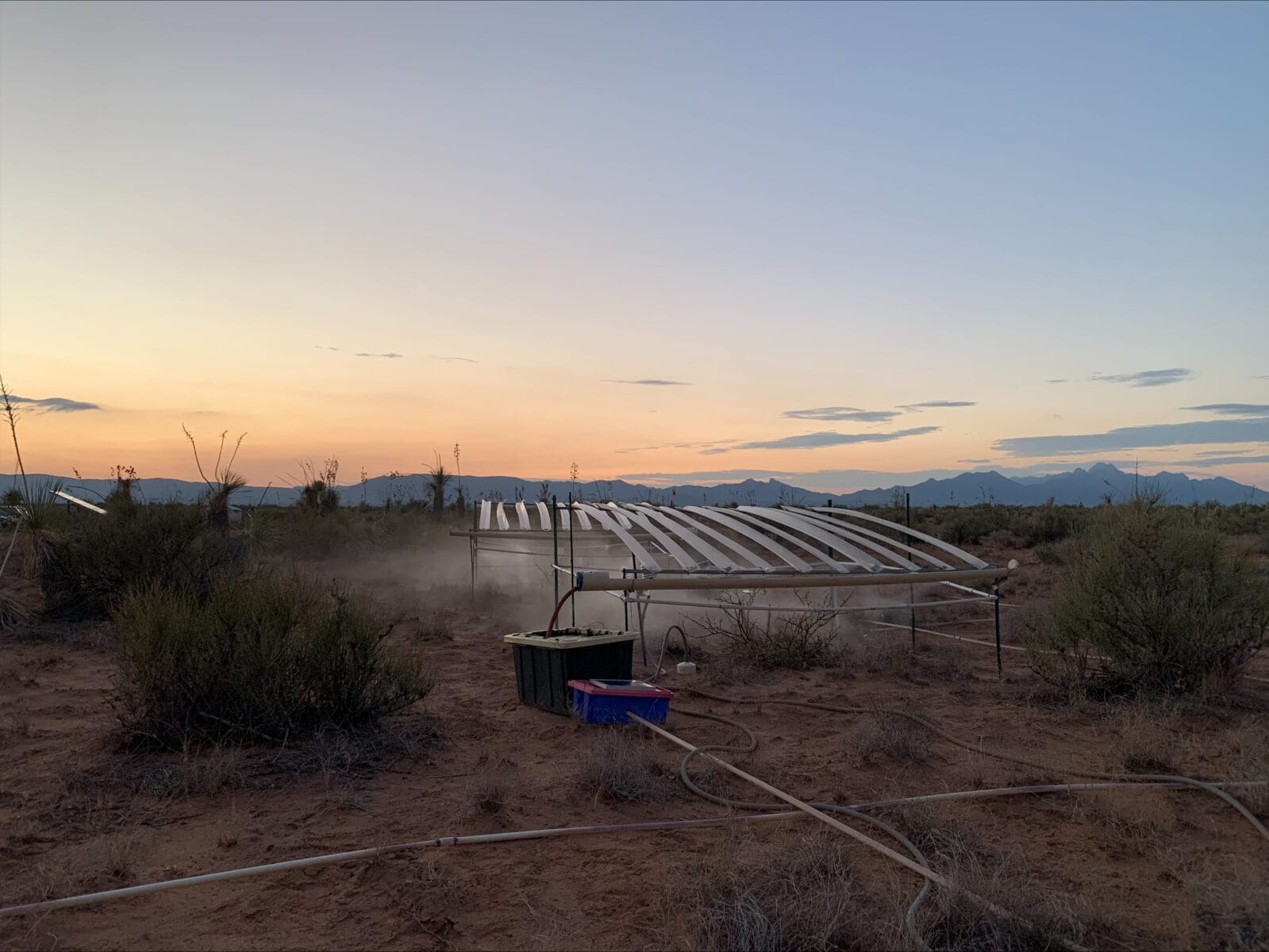
Long-term Ecosystem Responses to Directional Changes in Precipitation
Precipitation and atmospheric moisture are manipulated through the use of rainout shelters, irrigation, and a misting system. Using a combination of these treatments allows us to examine the effects of precipitation and atmospheric moisture, both interactively and independently, on dryland ecosystems.
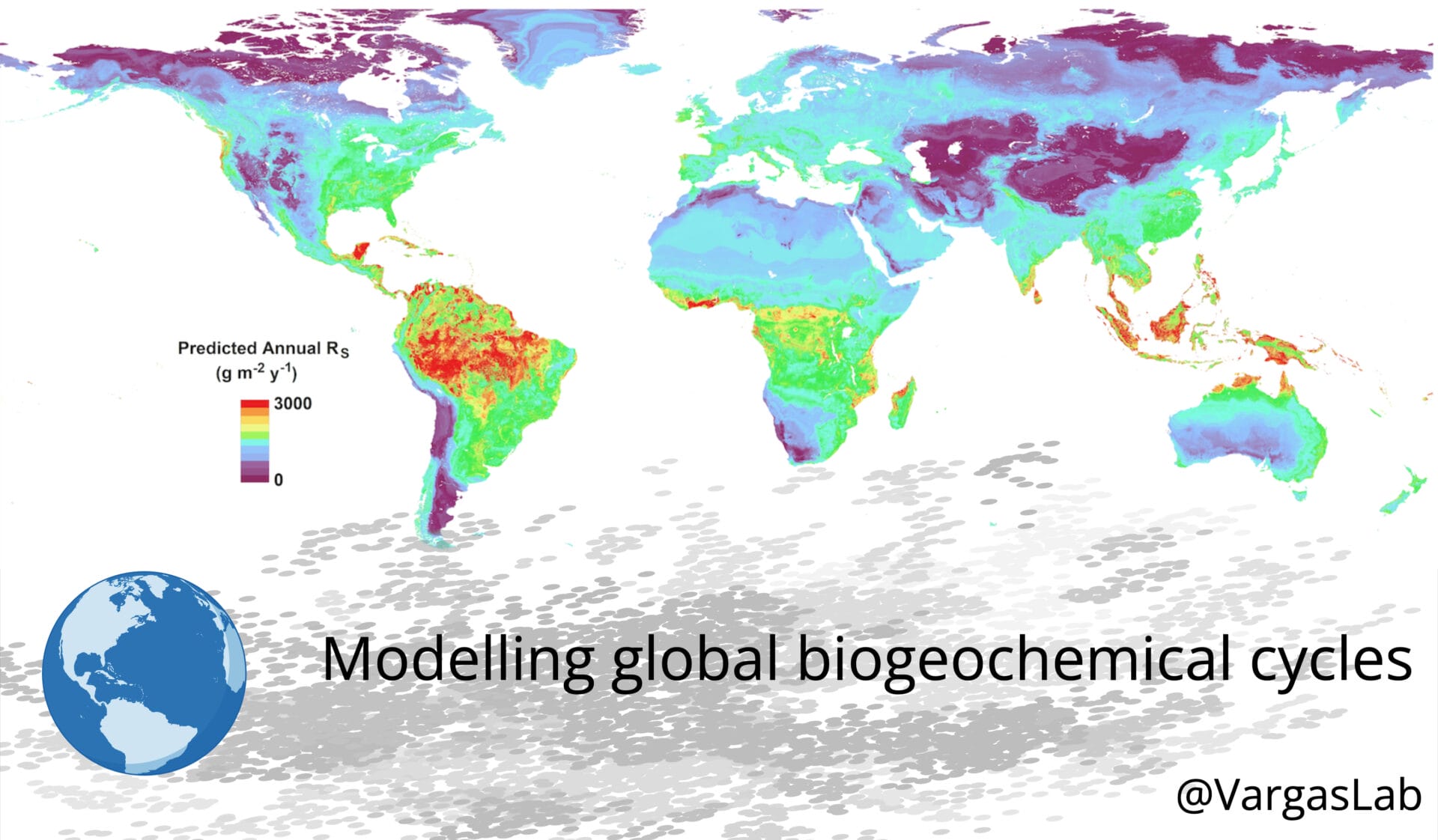
Modelling Global Biogeochemical Cycles

Life After Death: The Decomposition Across Drylands (DeAD) Project
DeAD is characterizing dryland decomposition from small to large spatial scales, with the goal of improving our ability to predict nutrient and carbon cycling through time and space in North American drylands. DeAD is building a quantitative understanding of dryland decomposition that functions from the microsite to the North America dryland region, by joining field, remote sensing, and a hierarchical continuum of models in a spatially-nested approach that leverages the power of the National Ecological Observatory Network.