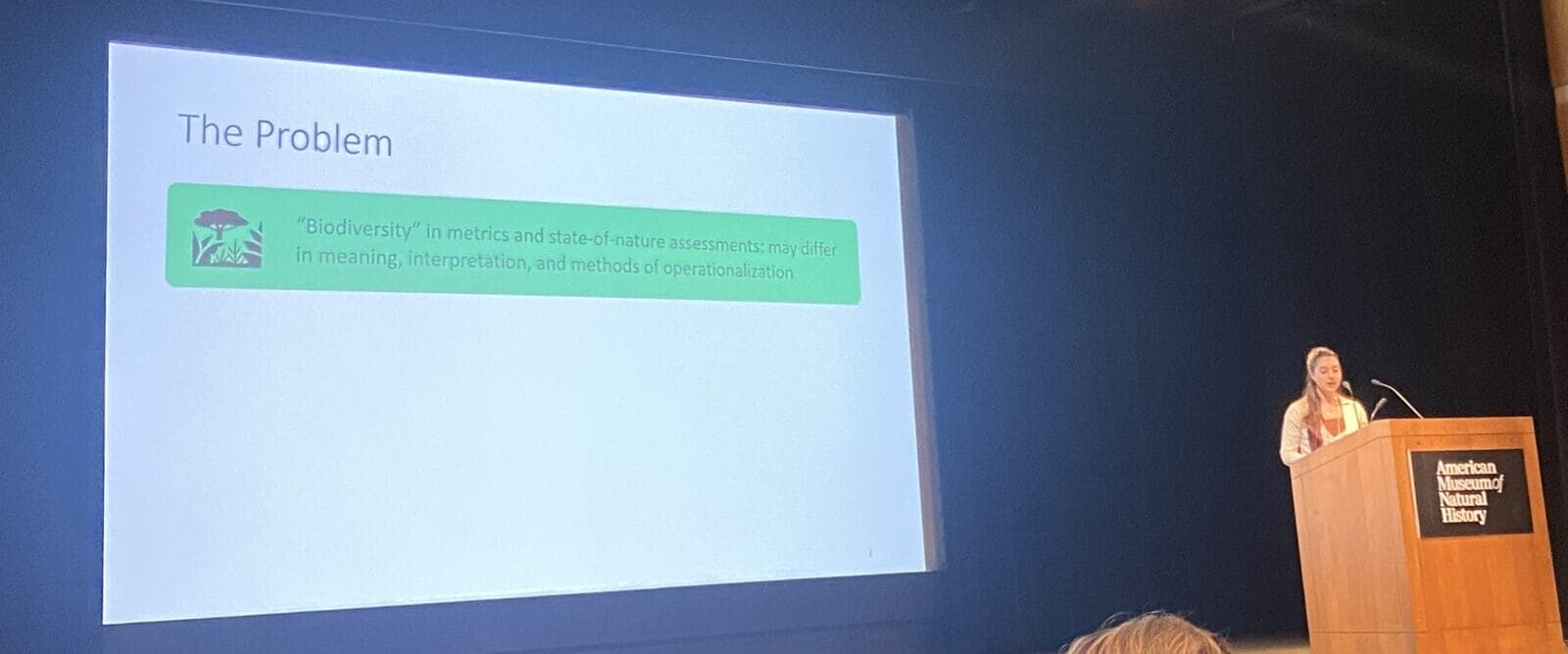
PhD student Alice Sansonetti presented at the Student Conference on Conservation Science (SCCS-NY 2025), organized by the Center for Biodiversity and Conservation (Center for Biodiversity & Conservation | AMNH) this October. Her talk focused on work from her dissertation research on developing biodiversity impact evaluation metrics for the Salt River Project utility company.
As “biodiversity” is one of the most frequently used terms in conservation, there are countless biodiversity indicators available and being developed each year. However, without a lack of consensus on a selection methodology this wealth of information can be an obstacle in the data-to-action pathway. This talk discussed the preliminary results of a literature review and assessment of a sample of biodiversity indicators. Alice summarized metric attributes and explored what data is used to inform and develop them, the pressures and biological processes that are often overlooked, and the most useful ecological characteristics to include.
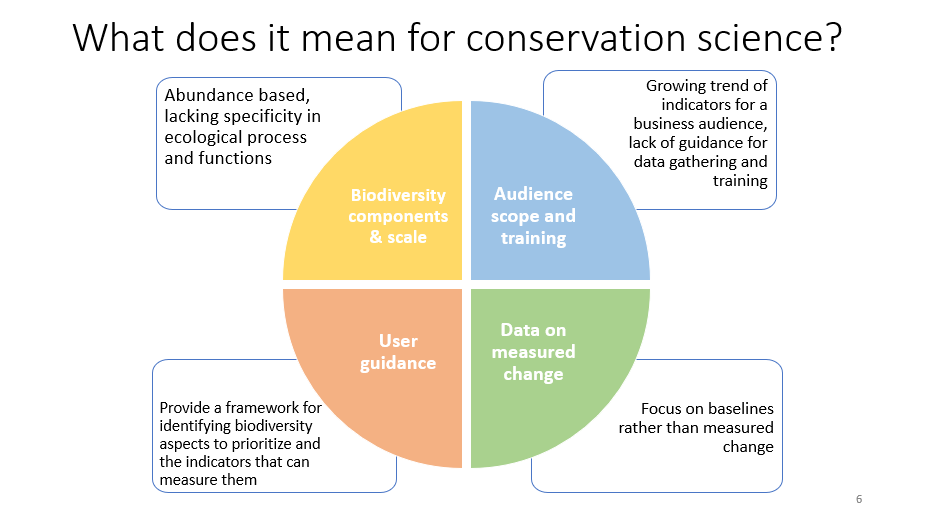
Early results suggest that many biodiversity metrics lack specificity regarding biodiversity components, ecological processes, and biodiversity scale. While pointing out these gaps can be valuable, the biodiversity measurement landscape is already oversaturated, so these results are not a call for development of further biodiversity indicators, but rather a guide for decision-making. As a takeaway, Alice suggests increasing development and availability of user and selection guidance for such metrics in order to improve the effective and efficient use of what is available, especially in the business and corporate sector.
Learn more about Alice's research with the Salt River Project and other business and biodiversity research at CBO on our project page.